Mechanical vs Chemical Defoamer: Which One Is Better for Industrial Fermentation?
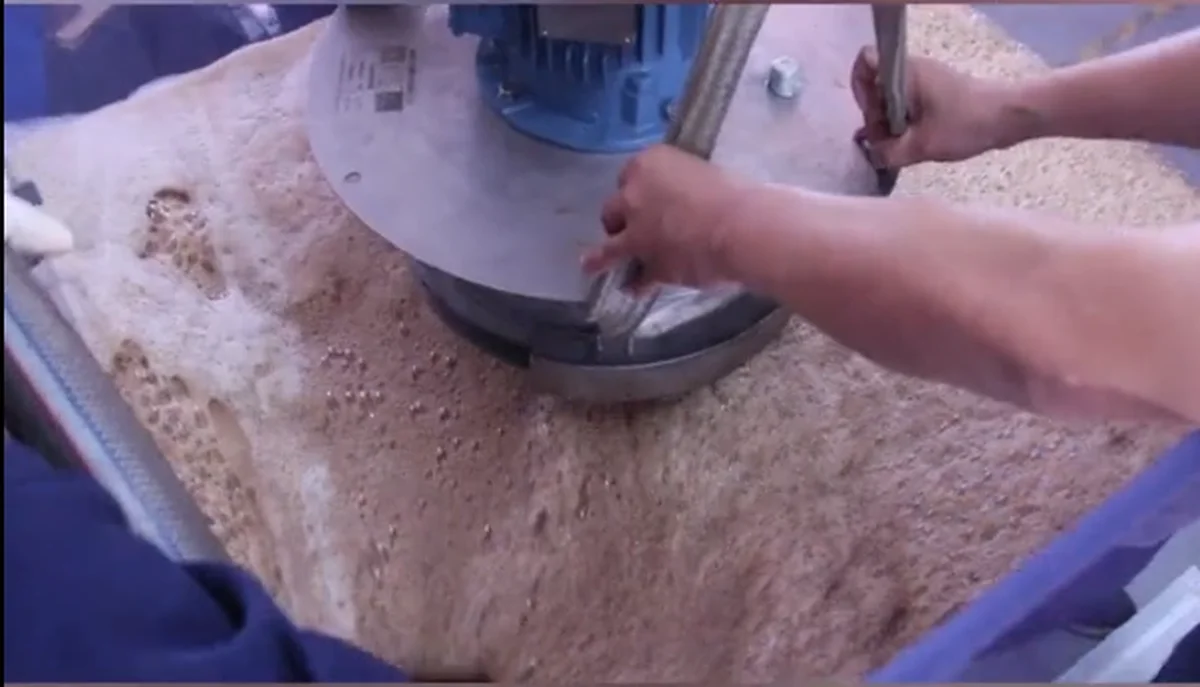
Foam is one of the most persistent and underestimated problems in industrial fermentation. Whether you're running a 5,000 L yeast fermentation, a 50 m³ soy sauce moromi vat, or a 20,000 L acetic acid reactor, stable foam on the surface causes overflow, product loss, level-sensor failure and — in the worst cases — complete batch contamination.
For decades, the standard answer has been chemical defoamers: silicone emulsions, polypropylene glycol (PPG) blends, or oil-based formulations dosed continuously into the fermenter. But as food safety regulations tighten, as clean-label expectations rise, and as production costs are scrutinised line by line, more fermentation engineers are asking: is there a better way?
This guide compares the two dominant foam control methods — chemical defoaming and mechanical foam breaking — across cost, food safety, maintenance, environmental impact and suitability for different fermentation types.
What Is a Chemical Defoamer?
A chemical defoamer (also called an antifoam agent) is a surface-active formulation that destabilises foam bubbles. The most common types used in fermentation are:
- Silicone-based defoamers — emulsified polydimethylsiloxane (PDMS), the most widely used in food and pharma fermentation.
- PPG / polyether defoamers — polypropylene glycol and ethylene oxide/propylene oxide copolymers.
- Oil-based defoamers — mineral oil or vegetable oil carriers with hydrophobic silica.
How it works
Chemical defoamers work by spreading across the foam surface and disrupting the thin liquid film that holds bubbles together. The defoamer droplet penetrates the bubble lamella, lowers local surface tension, and causes the bubble to collapse.
In continuous fermentation, defoamer is dosed automatically by a pump triggered by a foam-level sensor. In high-gas evolution fermentations (yeast, amino acid, vinegar), dosing can run at 50–500 mL per hour.
The hidden costs
This is where chemical defoamers get expensive:
- Recurring consumable cost. A 50 m³ fermentation line running 24/7 can consume 50–200 L of food-grade defoamer per month. At $15–30 per litre, that's $900–6,000 per month — every month, year after year.
- Residue in the product. Silicone defoamer leaves a measurable residue in the finished product. In food and beverage fermentation, this must be declared on the label.
- Interference with the culture. Chemical defoamers can inhibit the microorganisms you're trying to grow. Over-dosing slows growth, extends batch time, and reduces yield.
- Wastewater load. Defoamer that leaves with the effluent increases COD and BOD at your wastewater treatment plant.
What Is a Mechanical Foam Breaker?
A mechanical foam breaker (also called a centrifugal defoaming machine or foam destroyer) is a motor-driven device mounted on top of the fermenter. It destroys foam physically, without adding anything to the process.
The DP Series mechanical foam breaker works like this:
- A high-speed rotor sits just above the liquid surface.
- As foam rises, it is drawn into the centrifugal chamber.
- Centrifugal force shears the bubbles apart, separating liquid from gas.
- The separated liquid drains back into the tank through a return tube.
- The gas vents out through the top.
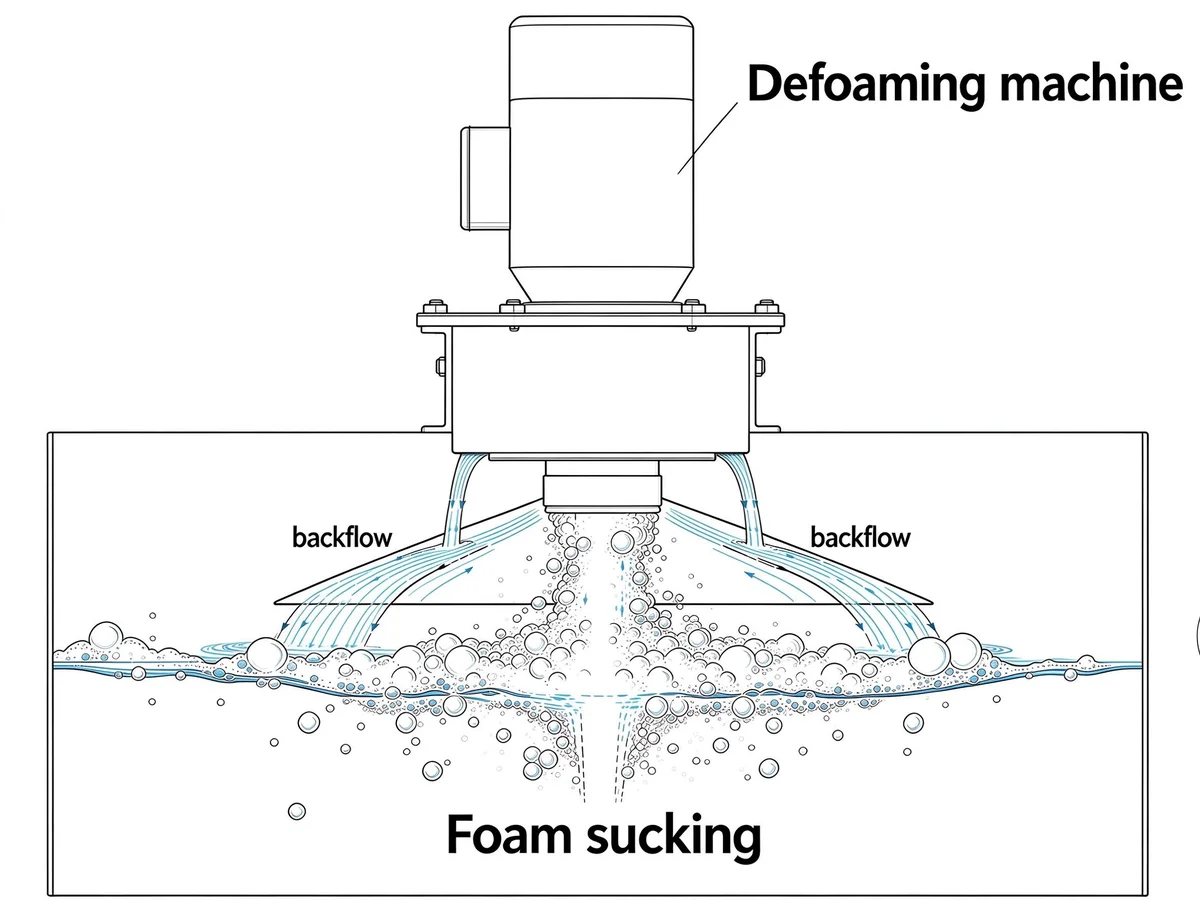
Figure 1: Mechanical foam breaker working principle — centrifugal separation of foam into liquid and gas
Hygienic design for food and pharma duty
The DP hygienic series is built for food, beverage and pharmaceutical fermentation:
- Wetted parts: 316L stainless steel with Ra < 0.8 µm surface finish
- Gaskets: EPDM or silicone, FDA-compliant
- CIP/SIP compatible: flush-mounted design allows clean-in-place and sterilise-in-place without disassembly
- Motor options: ABB or Siemens IP55 motors, with explosion-proof versions for solvent-based processes
- Certifications: CE marked, ISO 9001 manufactured
The advantages
- Zero consumables. Once you buy the unit, there is no ongoing chemical cost. Payback is typically 6–12 months.
- No residue, no label declaration. Nothing is added to your product — critical for organic, clean-label, and pharma fermentation.
- No interference with the culture. The DP Series only processes the foam layer at the air-liquid interface. Microorganisms in the bulk liquid are unaffected.
- Lower wastewater load. No defoamer means nothing extra in the effluent.
Side-by-Side Comparison
| Factor | Chemical Defoamer | Mechanical Foam Breaker (DP Series) |
|---|---|---|
| Upfront cost | Low ($500–$2,000 dosing system) | Medium ($3,000–$25,000 per unit) |
| Monthly consumable cost | $300–$6,000+ | $0 |
| Payback period | N/A (ongoing cost) | 6–12 months |
| Product residue | Yes — must be declared | None |
| Culture interference | Possible — can slow growth | None |
| Wastewater impact | Increases COD/BOD | No impact |
| Food safety | Food-grade grades available, but residue remains | 304/316L wetted parts, hygienic CIP design |
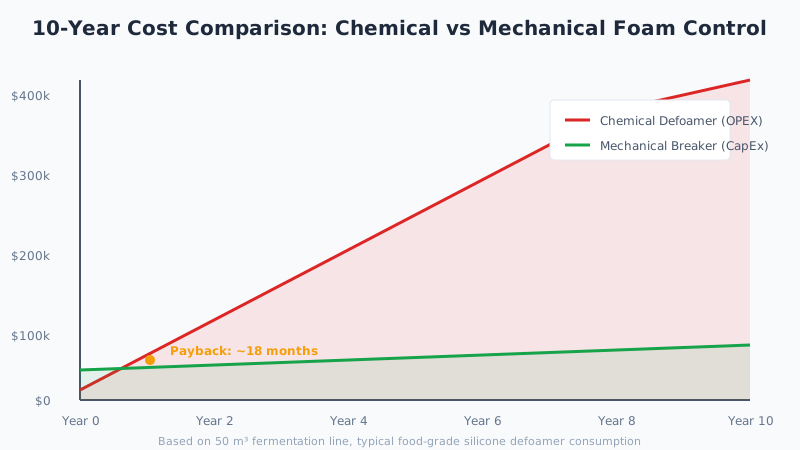
Figure 2: 10-year cumulative cost comparison for a 50 m³ fermentation line
When to Choose Mechanical vs Chemical
Choose mechanical if:
- You produce food, beverage or pharma products where residue is a concern.
- Your fermentation uses sensitive cultures (acetobacter, yeast, probiotics) where defoamer inhibition is a real risk.
- You run continuous or semi-continuous fermentation — the monthly defoamer bill adds up fast.
- You want a set-and-forget solution — no dosing pump, no chemical inventory.
Choose chemical if:
- You have very large, low-margin processes where the capital cost of mechanical units is hard to justify.
- You already have a well-functioning chemical dosing system and defoamer cost is not a pain point.
- You need temporary foam control during a trial or short campaign.
Real-World Example: Vinegar Fermentation
A typical 20 m³ acetator runs at 30–35°C with heavy aeration. Before mechanical control, the plant was dosing 80–150 L/month of food-grade silicone defoamer.
Cost analysis (12 months):
- Defoamer cost: 120 L/month × 12 × $22/L = $31,680 per year
- Dosing pump maintenance: $1,200 per year
- Residue testing and label compliance: $2,000 per year
- Total: ~$34,880 per year
After installing a DP-5 mechanical foam breaker (handling up to 40 m³/h):
- Capital cost: ~$8,500
- Annual maintenance: $300
- Payback period: ~3.2 months
On top of the cost savings, the plant removed defoamer residue from their finished vinegar — a major selling point for their "clean label" product line in the EU market.
Conclusion
For most industrial fermentation plants — especially food, beverage and pharma production — mechanical foam breaking is the better long-term choice. It eliminates recurring chemical costs, removes residue from your product, protects your culture, and pays for itself in under a year.
Chemical defoamers still have a place — as a backup, for very large low-margin processes, or for short campaigns. But if foam control is a daily cost and a daily headache in your plant, a mechanical foam breaker is the upgrade that pays for itself.
Get a Free Sizing & ROI Calculation
Tell us your tank parameters and we'll recommend the right DP model with a payback estimate:
- • Tank volume and diameter (m³ / mm)
- • Aeration rate (m³/h or L/min)
- • Liquid type and temperature
- • Current antifoam consumption (L/month) and cost