Mechanical Foam Breaker for FGD Desulfurization Slurry
Flue-gas desulfurization systems build up foam in the limestone slurry — driven by organic carry-over from the flue gas and process additives. Foam pushes slurry out, upsets level control and can drop desulfurization efficiency when reagent is wasted.
What foam actually costs you
- ▲Slurry foam upsets level and density readings, confusing automatic dosing
- ▲Foam carry-over blocks process lines and fouls dewatering
- ▲Reagent wasted in overflowing foam raises operating cost
- ▲Chemical antifoam dosing adds consumable cost and dosing pumps to maintain
How the DP Series fixes it
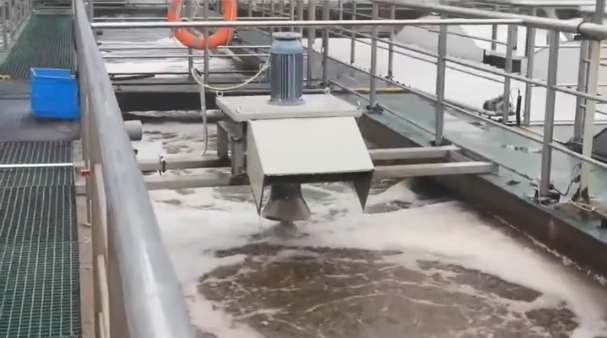
The DP Series breaks limestone-slurry foam mechanically on open or closed tanks and basins. Robust construction for abrasive slurry, with explosion-proof motor available for classified areas.
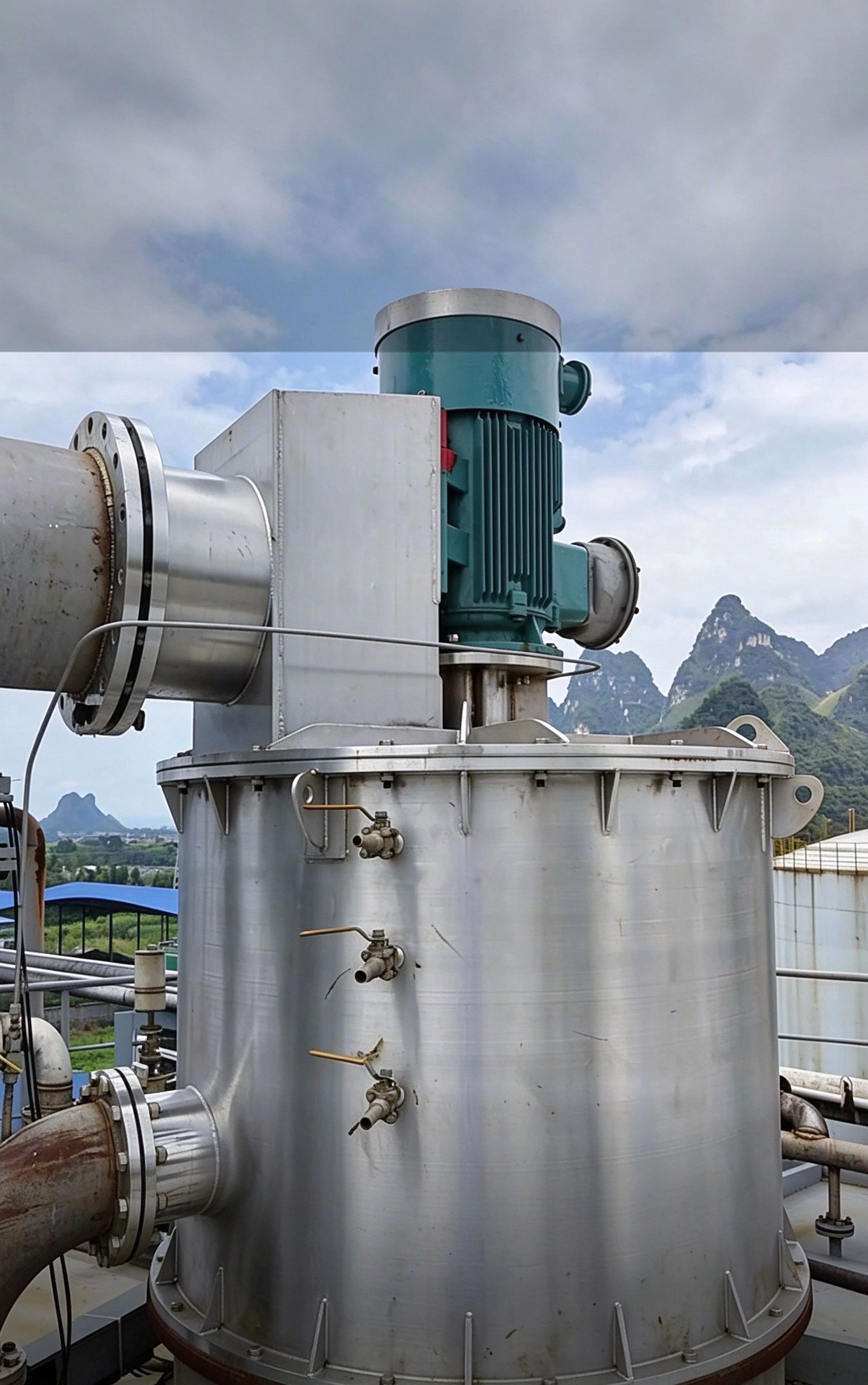
Open or closed tanks and basins; abrasive-resistant construction.
Discuss your FGD tank size and foam rateDP foam breaker model range for FGD
All DP models use the same mechanical defoaming principle — choose by your foam overflow rate. Size up one step if your rate is near the upper limit.
| DP foam breaker model | Power (kW) | Speed (rpm) | Defoaming capacity (m³/h) |
|---|---|---|---|
| DP-1 | 0.75 | 2,800 | 5 |
| DP-2 | 1.1 | 2,850 | 10 |
| DP-3 | 1.5 | 2,850 | 15 |
| DP-4 | 2.2 | 2,850 | 20 |
| DP-5 | 3 | 2,850 | 30 |
| DP-6 | 4 | 2,850 | 40 |
| DP-7 | 5.5 | 2,850 | 60 |
| DP-8 | 7.5 | 2,850 | 80 |
| DP-9 | 11 | 2,900 | 100 |
| DP-10 | 15 | 2,900 | 150 |
| DP-11 | 22 | 2,900 | 200 |
| DP-12 | 30 | 2,900 | 300 |
| DP-12S | 37 | 2,900 | 500 |
Mechanical foam breaker sizing calculator
Enter your tank dimensions and foam overflow rate. This calculator recommends the smallest DP mechanical defoaming machine that handles your process.
This application runs on the DP Series mechanical foam breaker — see the full model range, technical specifications, sizing calculator and wetted materials.
Why a mechanical foam breaker beats chemical defoamers here
Mechanical foam breaker (DP Series)
- • No chemical dosing — zero interference with your process chemistry
- • One-time purchase, 12-month warranty, 10-year service life
- • No ongoing anti-foam agent cost — payback in 6-12 months
- • No residue in product or effluent — food & pharma safe
- • Centrifugal principle: instant foam breaking at the surface
Chemical defoamer dosing
- • Recurring chemical cost every month
- • Can alter product flavour, colour or reaction chemistry
- • Residue in effluent increases wastewater load
- • Dosing pump maintenance and inventory
- • Overdosing kills the foam you actually need
Frequently asked questions
What causes foam in FGD limestone slurry?
Organic compounds carried over from the flue gas, plus process additives, stabilise foam in the limestone slurry. The foam upsets level readings and can waste reagent.
How does foam affect desulfurization efficiency?
Foam pushes slurry out of the reaction zone, confuses level and density instrumentation, and wastes reagent in overflowing foam — all of which lower SO₂ removal efficiency.
Can the DP Series handle abrasive slurry?
Yes. Wetted parts are stainless steel with a hard-alloy locating bushing, built for abrasive limestone slurry service.
Is an explosion-proof motor available for FGD?
Yes. An explosion-proof motor option is available for classified areas in power and industrial plants.
How does mechanical breaking compare to chemical antifoam in FGD?
Chemical antifoam adds consumable cost, dosing pumps and possible chemistry interference. The DP Series breaks foam mechanically, continuously, with no consumables.
Foam control in related processes
Get a quote for your foam problem
Tell us your application, tank volume and foam rate — we will recommend the right DP Series model and quote within one working day.