Mechanical Foam Breaker for Flotation Cell Overflow
In mineral flotation, controlled froth is part of the process — but unstable, surging foam overflows the cell lip, spills concentrate and upsets the pulp level that operators work hard to stabilise. Chemical defoamers attack the same froth you rely on.
What foam actually costs you
- ▲Surging foam overflows the cell lip — spilled concentrate and lost recovery
- ▲Excess foam disrupts pulp level control and cell operation
- ▲Aggressive chemical defoamers can kill the froth the flotation needs
- ▲Foam carry-over blocks launders and downstream dewatering
How the DP Series fixes it
The DP Series gives controlled mechanical foam breaking above flotation cells and pulp launders, suppressing surge foam without dosing chemistry into the flotation system.
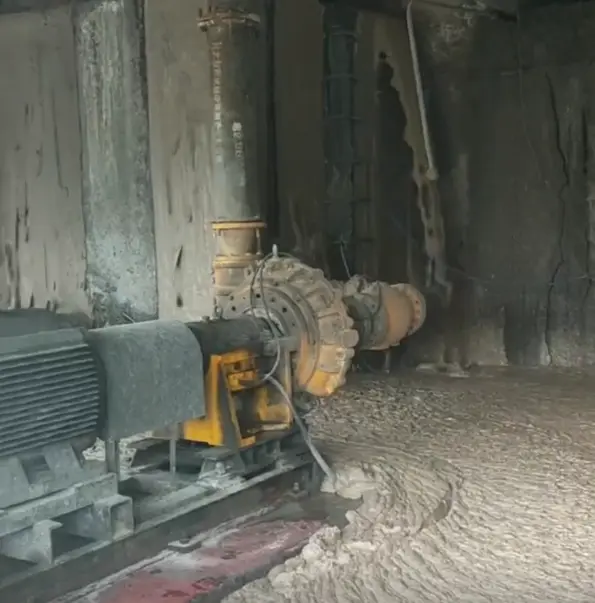
Mounted above cells and launders; robust construction for slurry service.
Discuss your flotation circuit and foam rateHow a mechanical foam breaker fits your process
Why flotation foam surges out of control
Flotation relies on controlled froth to carry hydrophobic mineral particles to the launder. But when ore feed rate, pulp density or reagent dosing shifts, the froth layer thickens beyond design capacity. Air entrainment from agitation, hydrophobic gangue minerals and residual surfactants in recycle water all add to foam volume. The result: foam climbs the cell wall faster than the launder can remove it, surging over the lip in big slugs that spill concentrate onto the floor and dump pulp level control.
Typical flotation circuit operating conditions
Flotation cells run at pulp densities of 25-40% solids, pH 8-11 for sulfide ores or pH 9-12 for iron oxide. Slurry is mildly abrasive, often 5-15% by weight minus 10 micron fines. Temperatures are ambient, 10-35°C. Foam layer thickness at design is 100-300 mm; surge foam can reach 500-800 mm in unstable feed conditions. Cell diameters range from 1.5 m lab units to 6 m tank cells in concentrators.
Where to mount the DP foam breaker
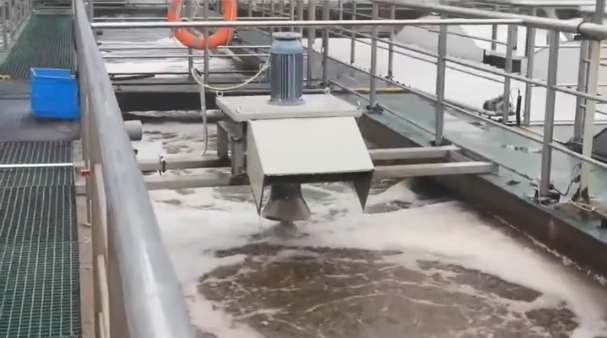
The DP-K industrial model mounts on a flange above the cell or launder, with the rotor running just above the froth surface. It breaks surge foam at the point it climbs the cell wall — before it spills. For row flotation machines, one unit every 3-4 cells covers the surge zones. No chemical dosing point, no injection into the slurry, no effect on reagent chemistry.
Sizing for your flotation circuit
Estimate your surge foam rate in m³/h: measure the foam layer overflow volume during a surge event and multiply by 1.2 safety factor. Use the sizing calculator on this page to match a DP model. Most mineral processing circuits run DP-7 to DP-10 units (60-150 m³/h capacity). For lab and pilot cells, DP-3 to DP-5 covers 15-30 m³/h.
DP foam breaker model range for Flotation
All DP models use the same mechanical defoaming principle — choose by your foam overflow rate. Size up one step if your rate is near the upper limit.
| DP foam breaker model | Power (kW) | Speed (rpm) | Defoaming capacity (m³/h) |
|---|---|---|---|
| DP-1 | 0.75 | 2,800 | 5 |
| DP-2 | 1.1 | 2,850 | 10 |
| DP-3 | 1.5 | 2,850 | 15 |
| DP-4 | 2.2 | 2,850 | 20 |
| DP-5 | 3 | 2,850 | 30 |
| DP-6 | 4 | 2,850 | 40 |
| DP-7 | 5.5 | 2,850 | 60 |
| DP-8 | 7.5 | 2,850 | 80 |
| DP-9 | 11 | 2,900 | 100 |
| DP-10 | 15 | 2,900 | 150 |
| DP-11 | 22 | 2,900 | 200 |
| DP-12 | 30 | 2,900 | 300 |
| DP-12S | 37 | 2,900 | 500 |
Mechanical foam breaker sizing calculator
Enter your tank dimensions and foam overflow rate. This calculator recommends the smallest DP mechanical defoaming machine that handles your process.
This application runs on the DP Series mechanical foam breaker — see the full model range, technical specifications, sizing calculator and wetted materials.
Why a mechanical foam breaker beats chemical defoamers here
Mechanical foam breaker (DP Series)
- • No chemical dosing — zero interference with your process chemistry
- • One-time purchase, 12-month warranty, 10-year service life
- • No ongoing anti-foam agent cost — payback in 6-12 months
- • No residue in product or effluent — food & pharma safe
- • Centrifugal principle: instant foam breaking at the surface
Chemical defoamer dosing
- • Recurring chemical cost every month
- • Can alter product flavour, colour or reaction chemistry
- • Residue in effluent increases wastewater load
- • Dosing pump maintenance and inventory
- • Overdosing kills the foam you actually need
Frequently asked questions
Why is too much foam a problem in flotation?
Flotation needs controlled froth to carry concentrate — but surge foam overflowing the cell lip spills concentrate and upsets the pulp level operators work hard to stabilise.
Will the foam breaker kill the froth my flotation needs?
No. The DP Series suppresses surge foam mechanically, above the cell, without dosing chemistry — so the process froth you rely on is left intact.
Where is it installed above flotation cells?
The DP-K model mounts over cells and pulp launders, breaking foam at the surface before it surges over the lip.
Can it handle slurry carry-over?
Yes. Stainless wetted parts with a hard-alloy bushing handle the abrasive slurry service typical of flotation circuits.
Foam control in related processes
Get a quote for your foam problem
Tell us your application, tank volume and foam rate — we will recommend the right DP Series model and quote within one working day.