Mechanical Foam Breaker for Electroplating Baths
Electroplating baths foam from wetting agents, brighteners and the hydrogen evolved at the electrodes. Foam can carry bath liquor over the tank edge, leave pinholes in the deposit and unbalance the bath chemistry.
What foam actually costs you
- ▲Hydrogen gas and surfactants build foam that overflows the tank edge — bath loss
- ▲Air bubbles trapped in the deposit cause pinholes and quality rejects
- ▲Chemical defoamers can interfere with brightener balance and deposit quality
- ▲Foam on the bath surface disturbs rack and barrel handling
How the DP Series fixes it
The DP Series mounts over the plating bath and mechanically destroys foam at the surface, returning liquor to the bath. Corrosion-resistant wetted parts for plating chemistry.
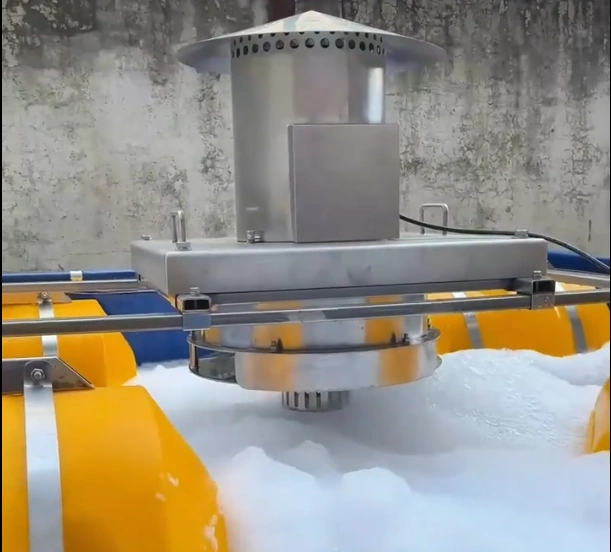
Open-bath mounting; corrosion-resistant construction for plating chemistry.
Discuss your bath size and foam rateHow a mechanical foam breaker fits your process
Foam sources in a plating bath
Three sources combine in a plating bath: hydrogen gas evolved at the cathode, wetting agents and brighteners that lower surface tension, and agitation or air sparging that works the bubbles into foam. The foam layer sits at the bath surface where rack and barrel lines work — and where parts pass through on their way out of the bath.
How foam hurts deposit quality
A bubble trapped at the workpiece surface blocks deposition in that exact spot. When the part lifts out of the bath, the bubble escapes and leaves a pinhole — a quality reject in decorative, functional and PCB plating alike. Foam that overflows the tank edge also costs you bath chemistry, which must then be replaced and rebalanced.
Bath chemistry compatibility
The DP Series adds nothing to the bath — no defoamer, no carrier solvent, no surfactant. That protects the brightener balance and deposit quality that chemical defoamers can disturb. Corrosion-resistant wetted parts handle the bath chemistry; confirm your solution with our team.
DP foam breaker model range for Electroplating
All DP models use the same mechanical defoaming principle — choose by your foam overflow rate. Size up one step if your rate is near the upper limit.
| DP foam breaker model | Power (kW) | Speed (rpm) | Defoaming capacity (m³/h) |
|---|---|---|---|
| DP-1 | 0.75 | 2,800 | 5 |
| DP-2 | 1.1 | 2,850 | 10 |
| DP-3 | 1.5 | 2,850 | 15 |
| DP-4 | 2.2 | 2,850 | 20 |
| DP-5 | 3 | 2,850 | 30 |
| DP-6 | 4 | 2,850 | 40 |
| DP-7 | 5.5 | 2,850 | 60 |
| DP-8 | 7.5 | 2,850 | 80 |
| DP-9 | 11 | 2,900 | 100 |
| DP-10 | 15 | 2,900 | 150 |
| DP-11 | 22 | 2,900 | 200 |
| DP-12 | 30 | 2,900 | 300 |
| DP-12S | 37 | 2,900 | 500 |
Mechanical foam breaker sizing calculator
Enter your tank dimensions and foam overflow rate. This calculator recommends the smallest DP mechanical defoaming machine that handles your process.
This application runs on the DP Series mechanical foam breaker — see the full model range, technical specifications, sizing calculator and wetted materials.
Why a mechanical foam breaker beats chemical defoamers here
Mechanical foam breaker (DP Series)
- • No chemical dosing — zero interference with your process chemistry
- • One-time purchase, 12-month warranty, 10-year service life
- • No ongoing anti-foam agent cost — payback in 6-12 months
- • No residue in product or effluent — food & pharma safe
- • Centrifugal principle: instant foam breaking at the surface
Chemical defoamer dosing
- • Recurring chemical cost every month
- • Can alter product flavour, colour or reaction chemistry
- • Residue in effluent increases wastewater load
- • Dosing pump maintenance and inventory
- • Overdosing kills the foam you actually need
Frequently asked questions
What causes foam in electroplating baths?
Hydrogen gas evolved at the electrodes combines with wetting agents and brighteners to form foam at the bath surface. Agitation and air sparging make it worse.
How does foam cause pinholes in plating?
Air bubbles trapped at the workpiece surface prevent deposition in that spot. When the part is lifted out, the bubble leaves a pinhole and the part is rejected.
Can the DP Series work with corrosive plating chemistry?
Yes. Wetted parts are stainless steel with a hard-alloy bushing, selected for plating bath chemistry. Confirm your bath composition with our team.
Does it affect my brightener balance?
No. The DP Series adds nothing to the bath, so brightener and surfactant balance are untouched — which is exactly why it is safer than chemical defoamers.
Where is it mounted on the bath?
The DP-K model mounts above the bath surface at the tank edge, breaking foam without contacting the workpiece or disturbing rack and barrel handling.
Foam control in related processes
Get a quote for your foam problem
Tell us your application, tank volume and foam rate — we will recommend the right DP Series model and quote within one working day.