Mechanical Foam Breaker for Lithium Battery Recycling
Leaching, precipitation and washing steps in battery recycling generate foam as gases evolve from reacting slurries. Foam carries metal-bearing liquor out of the tank and can create overflow safety hazards — chemical defoamers add cost and risk contaminating the recovered salts.
What foam actually costs you
- ▲Foam carries metal-bearing liquor out of the tank — lost recovery value per batch
- ▲Overflow foam creates housekeeping and safety hazards in the plant
- ▲Chemical defoamer residue can contaminate recovered salts and downstream purity
- ▲Foam on level probes disrupts automated dosing and reaction control
How the DP Series fixes it
The DP Series breaks recycling-process foam mechanically on closed or open reaction tanks. Corrosion-resistant wetted parts for aggressive leach liquors; no chemical addition to the process.
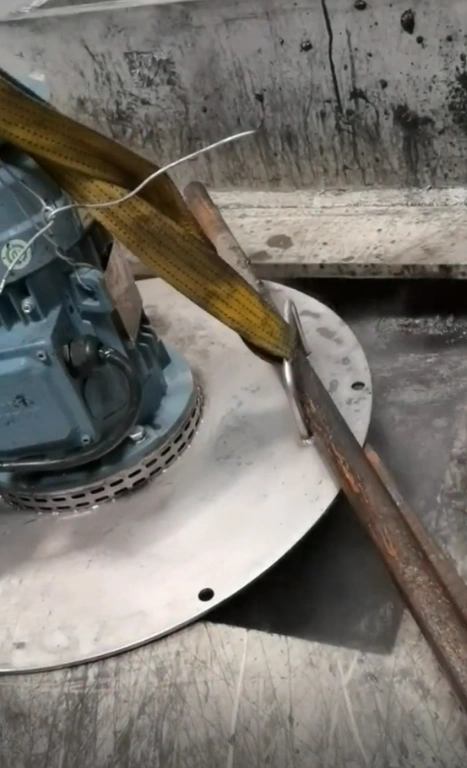
Closed or open reaction tanks; corrosion-resistant wetted parts.
Discuss your reactor size and foam rateHow a mechanical foam breaker fits your process
Where foam forms in battery recycling
Foam appears at several points in the recycling flowsheet. In shredding and black mass preparation, binder and electrolyte residues build foam in wash water. In acid leaching, gas evolution from the reacting slurry creates persistent foam on the leach tank. In precipitation and washing steps, pH shifts and gas release re-form foam. At every stage, metal-bearing liquor trapped in the foam is at risk of leaving the tank with the overflow.
Materials for aggressive leach liquors
Leach liquors are typically acidic (sulphuric or citric acid) and can contain organic solvents from the electrolyte. The DP Series uses 316L or 304 stainless wetted parts with a hard-alloy locating bushing. Confirm your exact leach chemistry with our team before ordering so we match the material grade to your process.
Safety in solvent processes
Recycling lines that handle electrolyte solvents or volatile organics should use the explosion-proof motor option. Mounting and sealing details are confirmed at quotation stage so the unit matches your plant's area classification.
DP foam breaker model range for Lithium
All DP models use the same mechanical defoaming principle — choose by your foam overflow rate. Size up one step if your rate is near the upper limit.
| DP foam breaker model | Power (kW) | Speed (rpm) | Defoaming capacity (m³/h) |
|---|---|---|---|
| DP-1 | 0.75 | 2,800 | 5 |
| DP-2 | 1.1 | 2,850 | 10 |
| DP-3 | 1.5 | 2,850 | 15 |
| DP-4 | 2.2 | 2,850 | 20 |
| DP-5 | 3 | 2,850 | 30 |
| DP-6 | 4 | 2,850 | 40 |
| DP-7 | 5.5 | 2,850 | 60 |
| DP-8 | 7.5 | 2,850 | 80 |
| DP-9 | 11 | 2,900 | 100 |
| DP-10 | 15 | 2,900 | 150 |
| DP-11 | 22 | 2,900 | 200 |
| DP-12 | 30 | 2,900 | 300 |
| DP-12S | 37 | 2,900 | 500 |
Mechanical foam breaker sizing calculator
Enter your tank dimensions and foam overflow rate. This calculator recommends the smallest DP mechanical defoaming machine that handles your process.
This application runs on the DP Series mechanical foam breaker — see the full model range, technical specifications, sizing calculator and wetted materials.
Why a mechanical foam breaker beats chemical defoamers here
Mechanical foam breaker (DP Series)
- • No chemical dosing — zero interference with your process chemistry
- • One-time purchase, 12-month warranty, 10-year service life
- • No ongoing anti-foam agent cost — payback in 6-12 months
- • No residue in product or effluent — food & pharma safe
- • Centrifugal principle: instant foam breaking at the surface
Chemical defoamer dosing
- • Recurring chemical cost every month
- • Can alter product flavour, colour or reaction chemistry
- • Residue in effluent increases wastewater load
- • Dosing pump maintenance and inventory
- • Overdosing kills the foam you actually need
Frequently asked questions
Why does lithium battery recycling foam?
Leaching, precipitation and washing steps evolve gases from reacting slurries, while organic electrolytes and binders stabilise the resulting foam.
Is the DP Series compatible with acid leach liquor?
Yes. Wetted parts are 316L or 304 stainless steel with hard-alloy bushing. Confirm your leach chemistry with our team for the right material grade.
Is an explosion-proof version available for solvent processes?
Yes. An explosion-proof motor option is available for processes handling solvents and volatile organics.
How does foam reduce metal recovery?
Metal-bearing liquor trapped in overflowing foam leaves the tank, so valuable salts are lost with the foam instead of being recovered in precipitation and washing.
Does mechanical breaking contaminate the recovered salts?
No. Nothing is added during mechanical breaking, so recovered salts stay free of chemical defoamer residue — important for battery-grade purity requirements.
Foam control in related processes
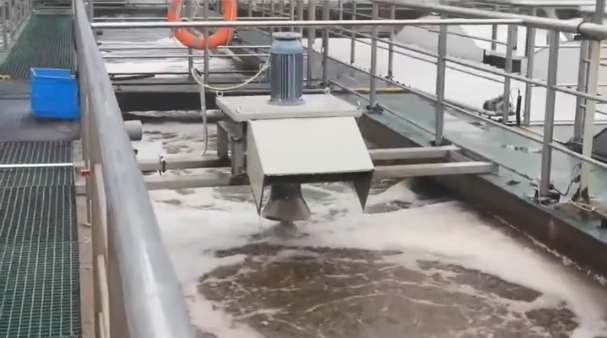
Get a quote for your foam problem
Tell us your application, tank volume and foam rate — we will recommend the right DP Series model and quote within one working day.