Mechanical Foam Breaker for Kombucha Fermentation
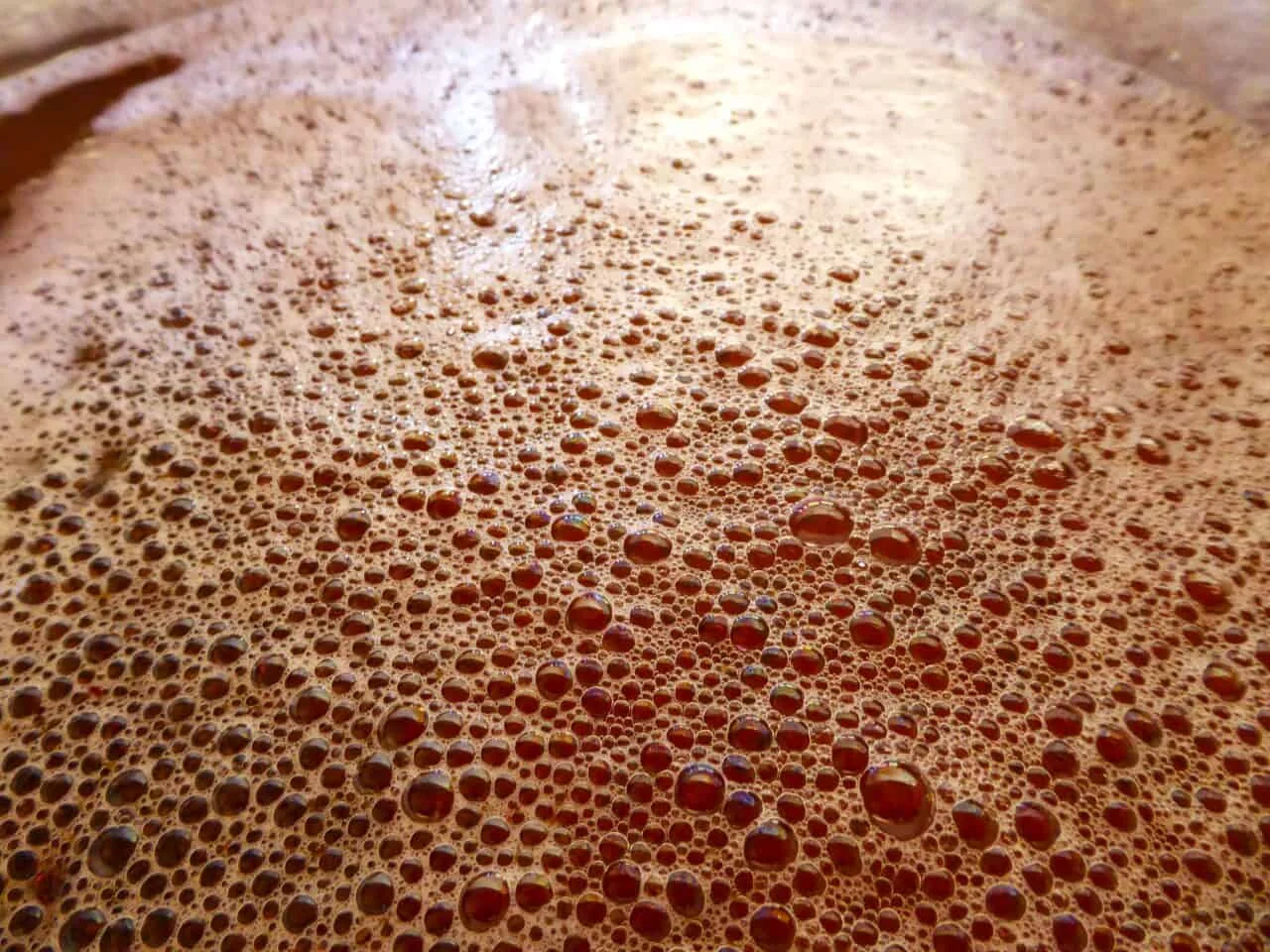
Kombucha (SCOBY) fermentation produces a thick, stable foam blanket as CO2 and volatile acids rise through the sweet tea. In scaled-up fermenters, that foam overflows the headspace, contaminates vent filters and carries valuable kombucha out of the tank — while chemical defoamers risk interfering with the SCOBY culture and the finished flavour.
What foam actually costs you
- ▲Dense SCOBY-related foam overflows the fermenter — product loss and floor contamination
- ▲Foam carries mother culture out of the tank, slowing batch-to-batch consistency
- ▲Chemical antifoam agents can suppress the SCOBY culture and alter the tangy flavour
- ▲Foam fouls air vents and makes level gauges unreliable
How the DP Series fixes it
The DP Series kombucha foam breaker flanges onto closed kombucha fermenters, draws surface foam into a centrifugal chamber and destroys it mechanically — the separated sweet tea returns to the tank automatically. No dosing pump, no chemical inventory, no residue in the finished kombucha.
Flange-mounted on closed kombucha fermenters and bioreactors. Hygienic 316L wetted parts, Ra < 0.5 µm finish.
Discuss your kombucha tank and foam rateHow a mechanical foam breaker fits your process
Why kombucha foams so aggressively
Kombucha fermentation is a symbiotic culture of bacteria and yeast (SCOBY) working through sweetened tea. As yeast produces CO2 and the acetic acid bacteria oxidise ethanol, gas bubbles rise through a liquid already rich in proteins, tea polyphenols and polysaccharides. These surface-active molecules stabilise the bubbles into a foam blanket that can grow to 10–20 % of the liquid volume in active batches. In open or poorly headspaced fermenters, that foam simply flows over the rim.
Typical kombucha operating conditions
Scaled kombucha production runs in 500–5000 L stainless fermenters at 20–28 °C with gentle aeration. Headspace is usually limited to 20–30 % to maximise batch size — exactly the margin foam needs to overflow. The SCOBY pellicle itself floats at the air–liquid interface, and any foam that builds up underneath it can lift the culture unevenly.
Where to mount the DP kombucha foam breaker
The DP hygienic model mounts on the fermenter's top flange, with the centrifugal impeller sitting just above the liquid surface. As foam rises, it is drawn into the breaker, sheared into liquid and gas, and the liquid drains back into the tank through a return tube. No wetted parts touch the SCOBY directly — only the foam layer is processed.
Sizing for kombucha
Match your observed foam overflow rate to the DP model table below. For kombucha tanks under 2000 L, DP-3 to DP-5 covers most surge events. For larger 5000 L fermenters with aggressive second fermentation, size up one step. Use the sizing calculator to confirm.
DP foam breaker model range for Kombucha
All DP models use the same mechanical defoaming principle — choose by your foam overflow rate. Size up one step if your rate is near the upper limit.
| DP foam breaker model | Power (kW) | Speed (rpm) | Defoaming capacity (m³/h) |
|---|---|---|---|
| DP-1 | 0.75 | 2,800 | 5 |
| DP-2 | 1.1 | 2,850 | 10 |
| DP-3 | 1.5 | 2,850 | 15 |
| DP-4 | 2.2 | 2,850 | 20 |
| DP-5 | 3 | 2,850 | 30 |
| DP-6 | 4 | 2,850 | 40 |
| DP-7 | 5.5 | 2,850 | 60 |
| DP-8 | 7.5 | 2,850 | 80 |
| DP-9 | 11 | 2,900 | 100 |
| DP-10 | 15 | 2,900 | 150 |
| DP-11 | 22 | 2,900 | 200 |
| DP-12 | 30 | 2,900 | 300 |
| DP-12S | 37 | 2,900 | 500 |
Mechanical foam breaker sizing calculator
Enter your tank dimensions and foam overflow rate. This calculator recommends the smallest DP mechanical defoaming machine that handles your process.
This application runs on the DP Series mechanical foam breaker — see the full model range, technical specifications, sizing calculator and wetted materials.
Why a mechanical foam breaker beats chemical defoamers here
Mechanical foam breaker (DP Series)
- • No chemical dosing — zero interference with your process chemistry
- • One-time purchase, 12-month warranty, 10-year service life
- • No ongoing anti-foam agent cost — payback in 6-12 months
- • No residue in product or effluent — food & pharma safe
- • Centrifugal principle: instant foam breaking at the surface
Chemical defoamer dosing
- • Recurring chemical cost every month
- • Can alter product flavour, colour or reaction chemistry
- • Residue in effluent increases wastewater load
- • Dosing pump maintenance and inventory
- • Overdosing kills the foam you actually need
Frequently asked questions
Will a mechanical foam breaker harm my SCOBY culture?
No. The DP Series only destroys surface foam at the air–liquid interface and returns separated liquid to the tank. It never touches or shears the SCOBY pellicle itself.
Can I stop using chemical antifoam in kombucha production?
In most scaled kombucha fermentations, yes. A correctly sized DP Series replaces silicone or PPG antifoam dosing and removes the residue risk from the finished drink.
How much product loss does kombucha foam overflow cause?
In active batches, foam carry-over can lose 5–15 % of the brewed volume per run, plus the labour of cleaning floors and vents. Over a year that is significant yield.
Which DP model fits a 1000 L kombucha fermenter?
Most 1000 L kombucha tanks with mild to moderate foam run on DP-3 or DP-4. Use the sizing calculator with your measured foam overflow rate to confirm.
Is the wetted material food-safe for kombucha?
Yes — DP hygienic models use 316L stainless steel wetted parts with Ra < 0.5 µm inside finish, suitable for food and beverage contact.
Foam control in related processes
Get a quote for your foam problem
Tell us your application, tank volume and foam rate — we will recommend the right DP Series model and quote within one working day.